Occupational health care at Mehiläinen
Read more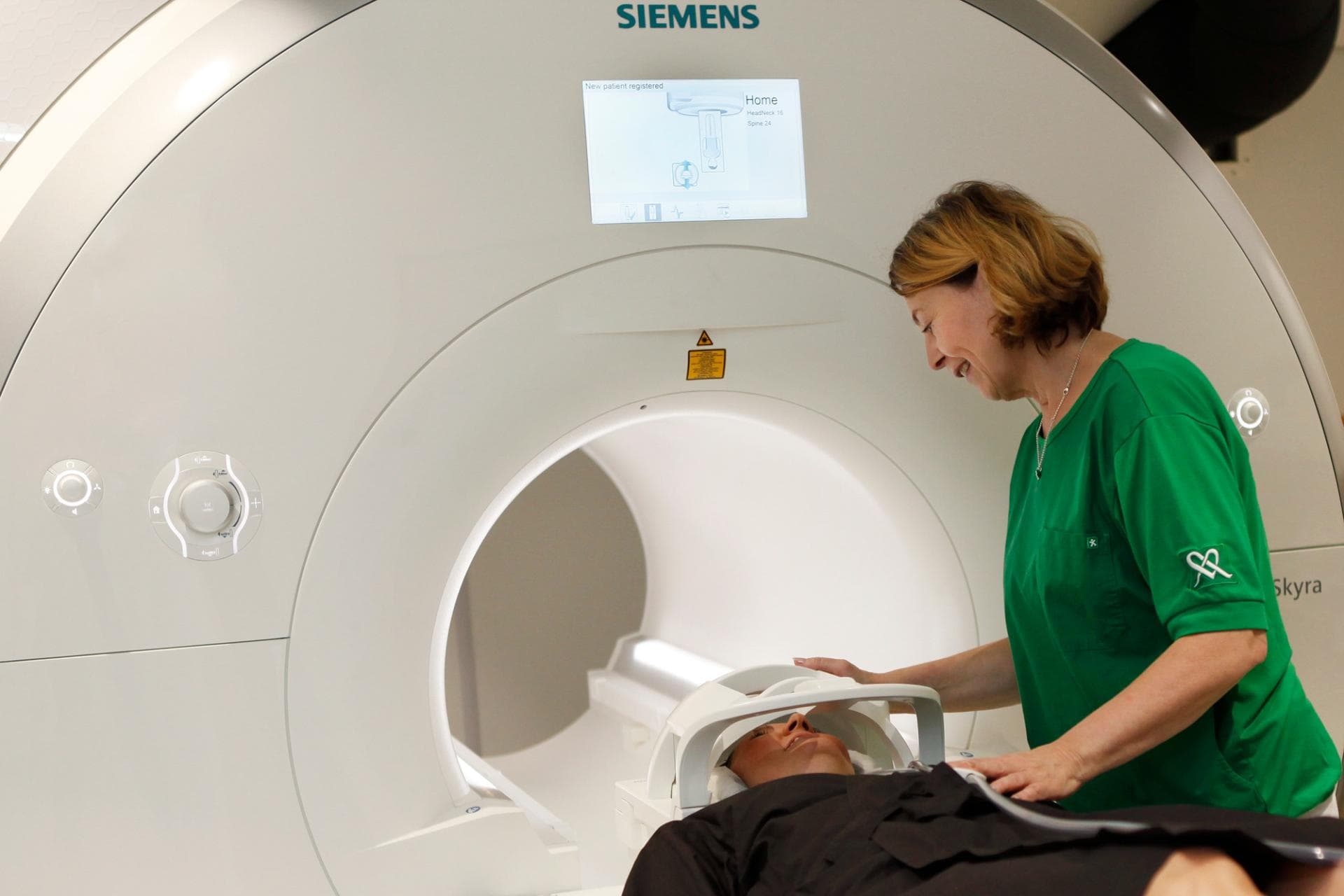
A quick and accurate diagnosis is key to an employee's recovery and to accelerating their return to work
A fast and effective treatment path is in the interest of both the employee and the employer. Modern diagnostics play a key role, speeding up the start of the right treatment and the employee's return to work.
The development of medical diagnostics, and especially imaging methods, has been rapid. This has changed established practices: an MRI scan is no longer an expensive special examination, but part of first-line imaging examinations.
The absence of modern imaging methods, such as magnetic resonance imaging, from the range of examinations can, at worst, slow down obtaining the correct diagnosis and starting treatment. This, in turn, can be reflected in the company, for example, as a longer sickness absence for the employee or reduced work ability.
Magnetic resonance imaging has established its position as the primary imaging method for many diseases and injuries. It produces more detailed information about the subject being examined than traditional radiography, which is essential for an accurate diagnosis. A significant advantage is also the absence of radiation exposure, unlike in radiography which uses ionising radiation and can increase health risks.
In occupational health care, magnetic resonance imaging has been considered an expensive examination, but as the price level has decreased, it is now comparable in cost to other imaging methods. Thanks to the more detailed information it provides, it is now also included in the first-line examinations of medical treatment recommendations.
When analysing Mehiläinen's data, it is observed that in occupational health agreements that include magnetic resonance imaging, the use of other imaging, such as radiography, decreases, and thus the changes in total costs per employee remain minimal.
The most important task of modern diagnostics is to enable more detailed diagnostics at the earliest possible stage and to treat the patient in accordance with up-to-date medical treatment recommendations. This improves both the quality and the outcome of the treatment, which in turn supports a faster recovery and return to work.
Mehiläinen's occupational health customer, Autokeskus, sees comprehensive occupational health services as an investment that pays for itself through timely and smooth access to care, shorter treatment paths and sickness absences. Read Autokeskus's views on comprehensive occupational health services as part of modern work ability management.
Expert: Jonas Saraneva, Director of Imaging Services, Mehiläinen