Lapsen korvien putkitus – loppu korvatulehduksille
Read more
Prices for specialists, e.g., gynaecologists, dermatologists, cardiologists, orthopaedists, and ophthalmologists, may vary according to the specialist. You can see the exact price on the specialist's own page or in the online booking by clicking on the doctor's name.
| Service | Price estimate | Info |
|---|---|---|
| Appointment with a specialist, 20 min Price per appointment. | from 140,10 € Without Kela reimbursement from 148,10 € Price estimate from 140,10 € Without Kela reimbursement from 148,10 € | Price per appointment. |
| Appointment with a specialist, 30 min Price per appointment. | from 163,10 € Without Kela reimbursement from 171,10 € Price estimate from 163,10 € Without Kela reimbursement from 171,10 € | Price per appointment. |
| Appointment with a specialist, 45 min Price per appointment. | from 199,10 € Without Kela reimbursement from 207,10 € Price estimate from 199,10 € Without Kela reimbursement from 207,10 € | Price per appointment. |
| Gynaecologist's appointment, 20 min | from 83,10 € Without Kela reimbursement from 153,10 € Price estimate from 83,10 € Without Kela reimbursement from 153,10 € | |
| Gynaecologist's appointment, 30 min | from 90,10 € Without Kela reimbursement from 160,10 € Price estimate from 90,10 € Without Kela reimbursement from 160,10 € | |
| Dermatologist's appointment, 20 min | from 144,10 € Without Kela reimbursement from 152,10 € Price estimate from 144,10 € Without Kela reimbursement from 152,10 € | |
| Dermatologist's appointment, 30 min | from 159,10 € Without Kela reimbursement from 167,10 € Price estimate from 159,10 € Without Kela reimbursement from 167,10 € | |
| ENT doctor's appointment, 20 min | from 142,10 € Without Kela reimbursement from 150,10 € Price estimate from 142,10 € Without Kela reimbursement from 150,10 € | |
| ENT doctor's appointment, 30 min | from 166,90 € Without Kela reimbursement from 174,90 € Price estimate from 166,90 € Without Kela reimbursement from 174,90 € | |
| Paediatrician's appointment, 20 min | from 142,10 € Without Kela reimbursement from 150,10 € Price estimate from 142,10 € Without Kela reimbursement from 150,10 € | |
| Paediatrician's appointment, 30 min | from 166,90 € Without Kela reimbursement from 174,90 € Price estimate from 166,90 € Without Kela reimbursement from 174,90 € | |
| Orthopaedist's appointment, 20 min | from 142,10 € Without Kela reimbursement from 150,10 € Price estimate from 142,10 € Without Kela reimbursement from 150,10 € | |
| Orthopaedist's appointment, 30 min | from 166,90 € Without Kela reimbursement from 174,90 € Price estimate from 166,90 € Without Kela reimbursement from 174,90 € | |
| Appointment with a psychiatrist, 45 min Price per appointment. | from 123,70 € Without Kela reimbursement from 173,70 € Price estimate from 123,70 € Without Kela reimbursement from 173,70 € | Price per appointment. |
| Appointment with a psychiatrist, 60 min Price per appointment. | from 172,10 € Without Kela reimbursement from 232,10 € Price estimate from 172,10 € Without Kela reimbursement from 232,10 € | Price per appointment. |
| Ophthalmologist's appointment, 30 min | from 166,90 € Without Kela reimbursement from 174,90 € Price estimate from 166,90 € Without Kela reimbursement from 174,90 € | |
| Ophthalmologist's appointment, 45 min | from 222,10 € Without Kela reimbursement from 230,10 € Price estimate from 222,10 € Without Kela reimbursement from 230,10 € |

Revised 11/16/2023
Published 11/16/2023
The EBV virus, which causes mononucleosis, can cause troublesome and long-lasting symptoms, but fortunately the disease usually cures quickly and easily especially in young children. In practice, many do not even know that they have had mononucleosis.
The most typical symptoms of mononucleosis are:
Sometimes, mononucleosis also causes these symptoms:
There is no cure for mononucleosis, and the disease usually subsides on its own. Hepatitis associated with the disease also heals on its own.
You can safely monitor your child’s health at home.
Consult your doctor if:
Mononucleosis often lasts longer than other infectious diseases. Symptoms usually pass in about 10 days. Full recovery can take time, as feeling weak and tired can persist for up to months.
If the spleen is enlarged, you should not return to sports for at least three weeks. This is due to the fact that an enlarged spleen may rupture easily. If this happens, the situation is serious and requires hospitalisation.
Mononucleosis is also called a kissing disease, as the Epstein-Barr virus that causes mononucleosis is transmitted through saliva.
Almost everyone is infected with the EB virus in Finland – usually as a child or at the latest in adolescence. In some of the infected, it leads to a condition called mononucleosis.
Very often, especially at school age, infections pass asymptomatically or they are contracted as a common cold-like illness. Viruses other than EB virus, such as cytomegalovirus, can sometimes cause an illness similar to mononucleosis.
Small children often get the disease in the day care centre, when toys go in the mouths of the little ones. If the disease is missed in childhood, it will almost certainly be encountered as a teenager through kissing.
After having the disease, EBV remains dormant in the body. Occasionally, the virus is activated and excreted in the saliva of the patient. Symptoms do not then appear on the carrier of the virus, but the disease can be transmitted to others, for example, through kissing.
Fortunately, the disease is not highly contagious, so there is no need to isolate the sick child. The child can also return to the day care centre or school when they are feeling well.
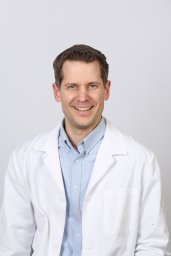
The specialist for this was Paediatrician Jukka Vakkila.
Allergy in a child
Common symptoms of childhood allergies include rash, rhinitis, eye symptoms, and respiratory symptoms.
Asthma in a child
Symptoms such as wheezing and prolonged coughing may indicate a chronic disease.
Children's sleep problems are manageable – a pediatrician supports the whole family
Ear infection in children and babies
Fever in children – our doctor can help if home remedies do not work or the fever persists
Hand, foot and mouth disease in children
Head lice – if getting rid of head lice is not possible at home, you can seek help from a doctor
Looking to get rid of pinworms? If eradication is not successful, our doctor will help
Meningitis in children and babies—how to recognise alarming symptoms
Pollen allergy in a child
Pollen allergy is one of the most common allergies in children, causing itching, a runny nose, and fatigue.
Children's allergist
Expert help for examining and treating childhood allergies and asthma.
Dental check-up for children and young people
Specialist dental check-up visit for children and adolescents.
Desensitisation for a child
Desensitisation offers an effective and long-term solution for a child's allergy symptoms.
Paediatric physiotherapy
Rehabilitation provided by a physiotherapist that aims to promote the child's functional capacity and mobility.
Vaccinations for babies and children – Frequently asked questions
Typical symptoms of mononucleosis are high fever, swollen lymph nodes and severely sore throat.
The disease can also cause eyelid swelling, rash, inflammation of the liver and enlargement of the spleen and liver.
The doctor can diagnose mononucleosis in a child on the basis of the symptoms when the disease is typical.
The rapid mononucleosis test detects mononucleosis in adults, but is not reliable when used for young children.
It is important to distinguish mononucleosis from tonsillitis which must be treated with medicine. This can be examined, for example, from the blood count. The child may also have tonsillitis and mononucleosis at the same time.
Although there is no curative treatment for mononucleosis, but symptoms can be relieved with painkillers, adequate drinking and rest.
On rare occasions, drinking is so difficult due to a sore throat that hydration in a hospital is necessary.
In adults, the symptoms of mononucleosis are often more severe than in children. The risk of rare sequelae, such as encephalitis, meningitis and myocarditis, increases with age.
Mononucleosis is often accompanied by a high fever, but the disease can even be asymptomatic in young children.
Serious sequelae are rare in mononucleosis, but possible especially in adults. Encephalitis, meningitis and myocarditis can occur as sequelae.
Mononucleosis is usually over in about ten days, but abnormal tiredness and weakness may persist for a couple of months.
Mononucleosis caused by the EBV virus occurs only once.
Mononucleosis is not very contagious. Contamination requires saliva contact, which means that it is transmitted as its name suggests, for example, when kissing.
In mononucleosis, inflammatory values are usually not elevated – unlike, for example, tonsillitis that causes similar symptoms.
A rash may occur during mononucleosis especially if the patient is treated with an Amoxicillin antibiotic course due to concurrent tonsillitis. A rash does not indicate a drug allergy and is not dangerous.