

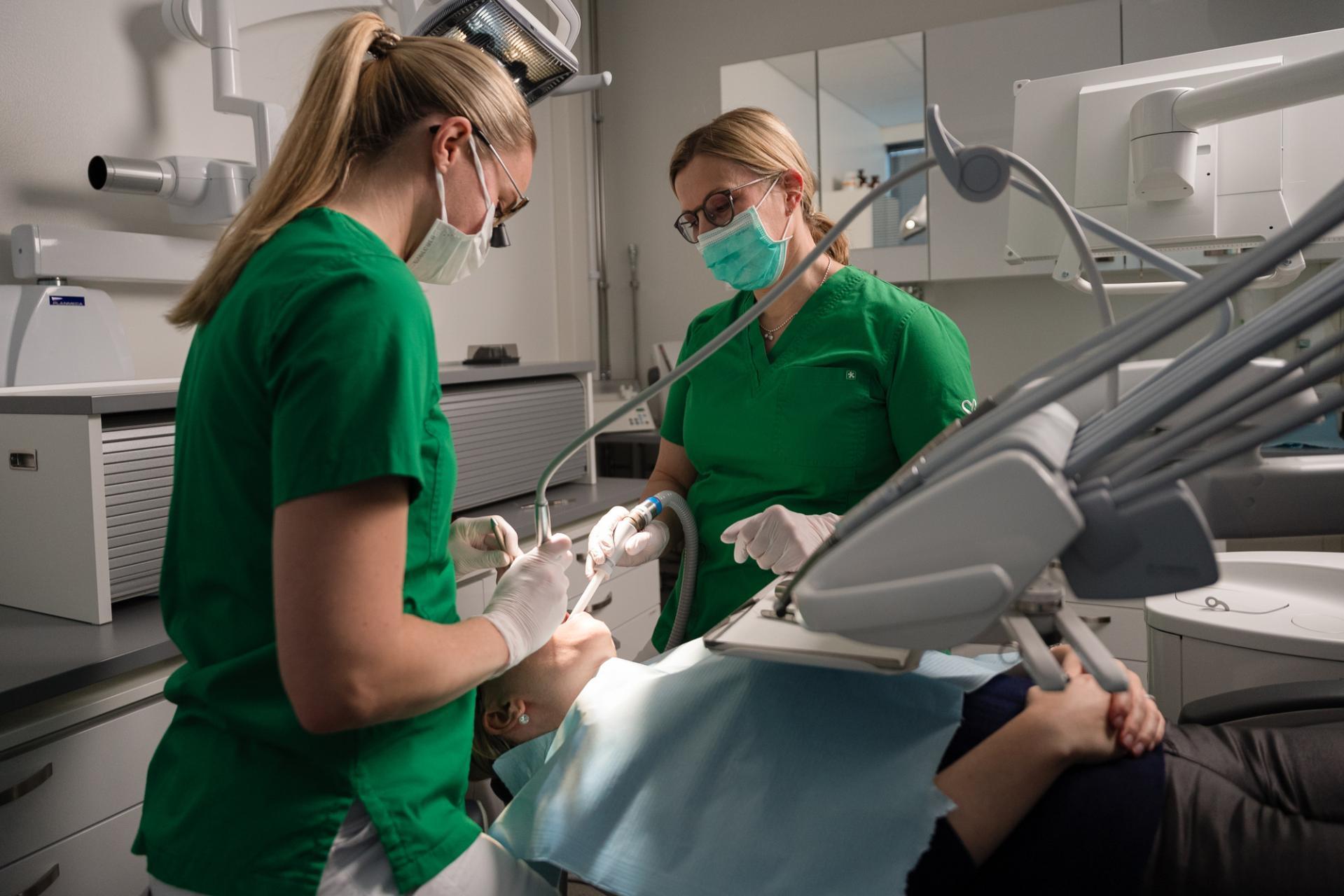
Occupational dental care is a concrete way to invest in staff well-being and work ability.
Mehiläinen's occupational dental care is a flexible fringe benefit for the company: the company defines the content of the service and the annual maximum amount and pays only for the services used.
Occupational dental care brings together a meaningful benefit for personnel and an opportunity for the employer to support the health and work ability of the personnel.
Read more on the topic: Occupational dental care as part of fringe benefits: why is it worth investing in?
Good oral health supports holistic well-being and work ability. Regular and preventive dental care helps identify oral health problems in time, before they have time to affect well-being, coping, or daily functional capacity.
Occupational dental care offers the employer a concrete way to complement services that support the work ability and well-being of personnel.
Read more about the importance of oral health for work ability: Oral health is part of work ability: why is prevention worthwhile?
The service can be built according to the company's needs, personnel, and budget.
1. The company chooses the content of the service: The company defines which dental care services the fringe benefit covers.
2. The company defines the annual maximum amount: The company decides how much benefit an employee can use per year.
3. Personnel use the service according to their needs: The employee books an appointment for dental care and uses services in accordance with the company agreement.
4. The company only incurs costs for services used: An unused benefit incurs no costs for the company.
The service package is defined on a company-specific basis. This allows the employer to build a suitable package for their personnel and simultaneously define the cost level of the benefit.
The service package can include, for example:
The costs of occupational dental care are easy to tailor to the company's budget. The company determines an annual maximum amount per employee and pays only for actual services used. An unused benefit incurs no costs, and there are no opening or maintenance fees associated with the agreement.
Occupational dental care can also be a tax-free fringe benefit for the employee and a tax-deductible expense for the employer when the conditions for tax exemption are met.
Read more about the taxation of occupational dental care: Taxation of occupational dental care: what should employers know?
An entrepreneur's own health and work ability are often tightly linked to the day-to-day operations of the company. Oral health problems can cause pain, reduce concentration, and, at worst, lead to absences. Occupational dental care helps take care of oral health proactively and support work ability even in the midst of a busy everyday life.
Read what benefits occupational dental care can offer an entrepreneur: Occupational dental care for an entrepreneur: support for health and work ability.
Fill in the request for quotation below and we will contact you.
Mehiläinen sales will gladly provide more information to any questions you may have:
tel. 010 414 0112 (local network rate/mobile charge) and myynti@mehilainen.fi.
Read more about Mehiläinen's occupational health care services.
We also offer services for entrepreneurs who have self-employed persons' pension insurance, i.e., YEL or MYEL insurance. Read more about occupational health for entrepreneurs.
Fields marked with * are mandatory.
Learn about the views of Leif Lindberg, HR Director at Osuuskauppa KPO, on the benefits of occupational dental care. The video was published in 2021.
The content of the service is defined company-specifically. Typically, it can include, for example, oral health examinations, X-ray photographies, tartar removal, and other basic dental care.
Yes. In the agreement, the company defines the service content, the annual maximum amount, and the reimbursable services.
Costs depend on the selected service package, the personnel’s use of services, and the maximum limit defined by the company. The company pays only for the services actually used.
Occupational dental care can be a tax-free employee benefit for the employee when the conditions set for a tax-free benefit are met. The tax treatment is determined on the basis of current legislation and guidelines from the Finnish Tax Administration.
The costs of occupational dental care can be tax-deductible for the company when the conditions for deductibility are met.
A company-specific agreement is made regarding occupational dental care, defining matters such as the service content, annual cost ceiling, and payment method.


